A legal requirement
Under the Smoke and Carbon Monoxide Alarm (England) Regulations, Bristol landlords must fit at least one smoke alarm on every storey of a rental property used as living accommodation, and a carbon monoxide alarm in any room used as living accommodation that contains a fixed combustion appliance — such as a boiler, wood burner or gas fire — with gas cookers currently excluded from the CO alarm requirement. All alarms must be tested and confirmed in working order on the first day of every new tenancy, and repaired or replaced as soon as reasonably practicable once a landlord is told, or otherwise finds out, that one isn't working.
These rules apply across the vast majority of private tenancies, and the requirement has been tightening rather than loosening — recent updates extended CO alarm coverage to any room with a fixed combustion appliance rather than only solid fuel, and it's a fair bet that alarm coverage requirements will keep expanding. Getting ahead of the standard now, rather than doing the legal minimum, saves you having to revisit the property again in a year or two.
We install mains-wired, interlinked smoke and heat alarms with battery back-up — so if one alarm triggers, they all sound throughout the property, giving tenants the earliest possible warning wherever they are in the house. Alarms are specified correctly for each room type: heat alarms in kitchens, where smoke alarms are prone to nuisance tripping from cooking, and standard smoke alarms in hallways, landings and living areas.
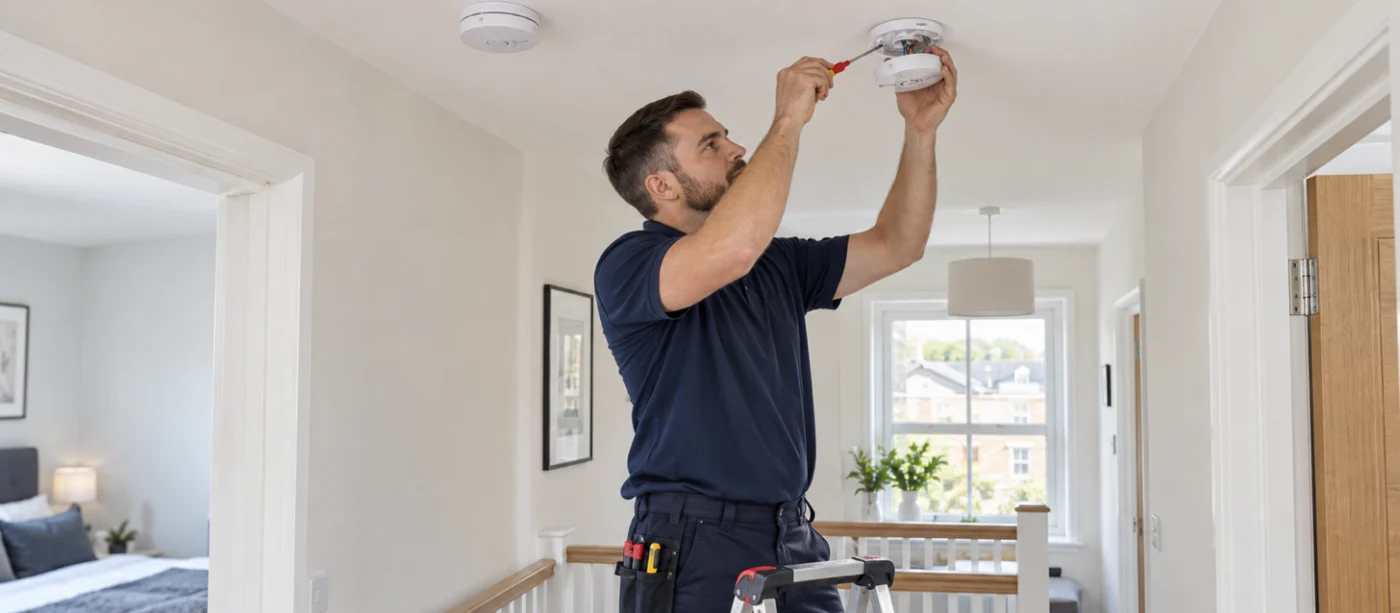
What's included
- Mains-wired, interlinked smoke & heat alarms
- Carbon monoxide alarms near combustion appliances
- Correct alarm type & placement per storey/room
- Full testing on the day, with a compliance certificate
- Often combined with your EICR visit to save a callout
When to book
The best time to have alarms checked or fitted is between tenancies, so everything is confirmed working before a new tenant collects keys — but we also fit and test alarms mid-tenancy if a tenant reports a fault, or if you're bringing an older property up to the current standard for the first time. If you're already booking an EICR, it's almost always worth combining it with an alarm check on the same visit, since we're on site testing the electrics anyway.
Pricing
Pricing depends on how many alarms the property needs and whether we're fitting new units or testing and replacing existing ones. A straightforward flat with two or three alarms is usually a same-day job at a fixed price; larger houses with multiple storeys and CO alarms take a little longer. We'll always confirm the price before we start.
Frequently asked questions
The regulations don't specify mains-wired alarms, but we recommend them as standard — they're more reliable and interlinked units give tenants earlier warning throughout the property.
Tenants are generally expected to test alarms themselves during the tenancy, but the landlord remains responsible for repair or replacement once a fault is reported.
No — CO alarms are only required in rooms with a fixed combustion appliance, so an all-electric property may not need one at all.
New tenancy starting?
Get your alarms checked and certified before move-in day.